Urgent — construction underway
Crimson Thread: Israel's New Separation Wall in the West Bank
Construction is underway. Communities are being displaced. Here's what you need to know.
22 km
Length of the separation wall and military road
22
Palestinian communities threatened with displacement
190,000
Dunams of agricultural land to be isolated
Mar 4, 2026
Date construction began in Atouf
What is Crimson Thread?
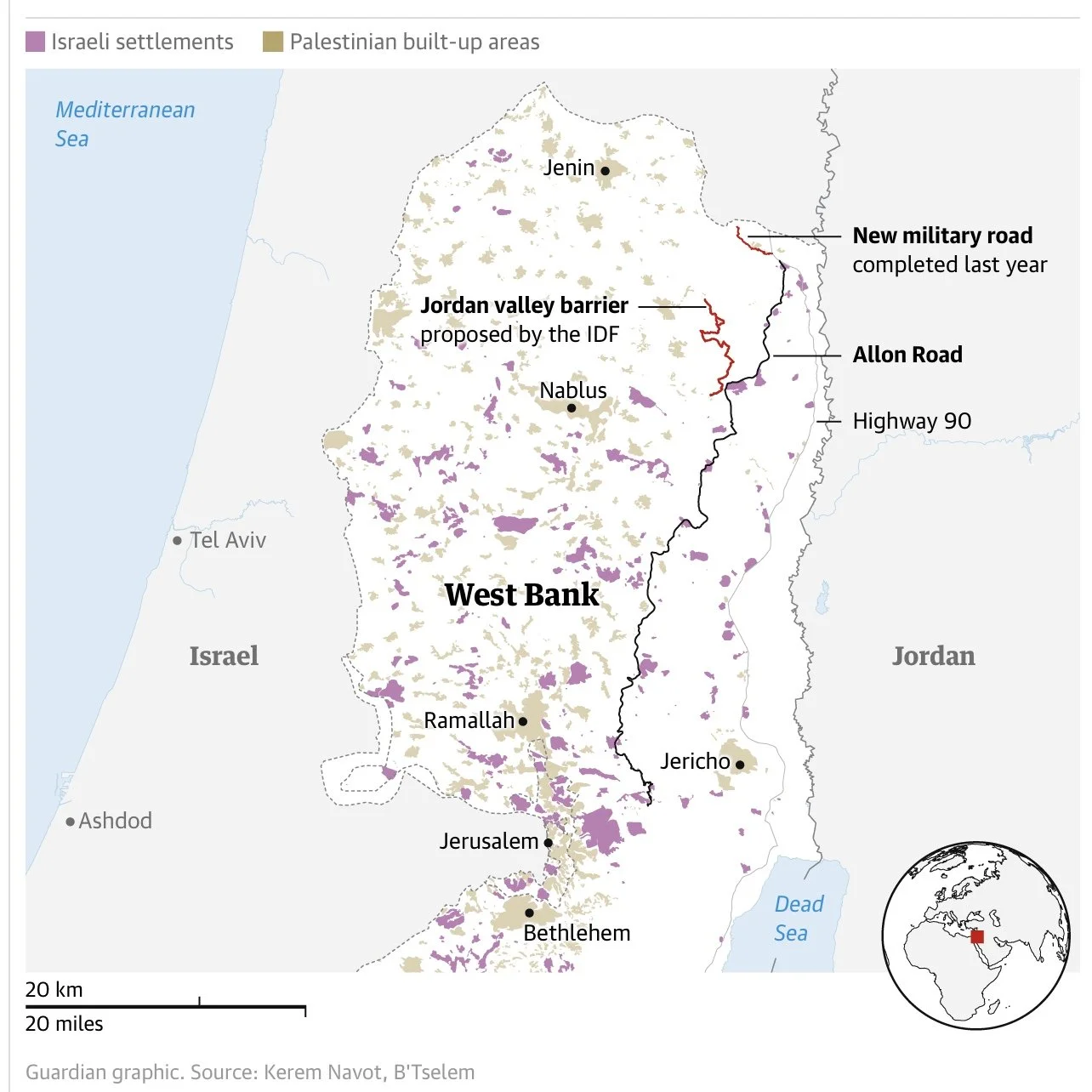
"Crimson Thread" is the name Israel has given to a new separation wall currently under construction in the northern Jordan Valley of the occupied West Bank. The project involves a 22-kilometer-long, 50-meter-wide barrier and accompanying military road running through the Buqe'aa Plain, from the Tayasir checkpoint in Tubas to the village of Ein Shibli near Nablus.
Construction began on March 4, 2026. Despite a temporary injunction issued by the Israeli Supreme Court in February 2026, the court subsequently cleared construction to proceed. Work actively advanced in June 2026.
Why it matters
The Jordan Valley is often called the breadbasket of Palestine — a fertile agricultural region where farming and sheepherding have sustained Palestinian communities for generations. Crimson Thread will:
- →Physically sever the northern Jordan Valley from the rest of the West Bank
- →Isolate approximately 190,000 dunams of Palestinian agricultural land east of the wall
- →Threaten 22 Palestinian communities — around 600 families — with displacement
- →Destroy water infrastructure: farmers in Atouf report that soldiers and settlers broke water pipelines during construction
- →Relocate the Hamra checkpoint, cutting Palestinians off from West Bank cities except through military-controlled crossings
Who is affected?
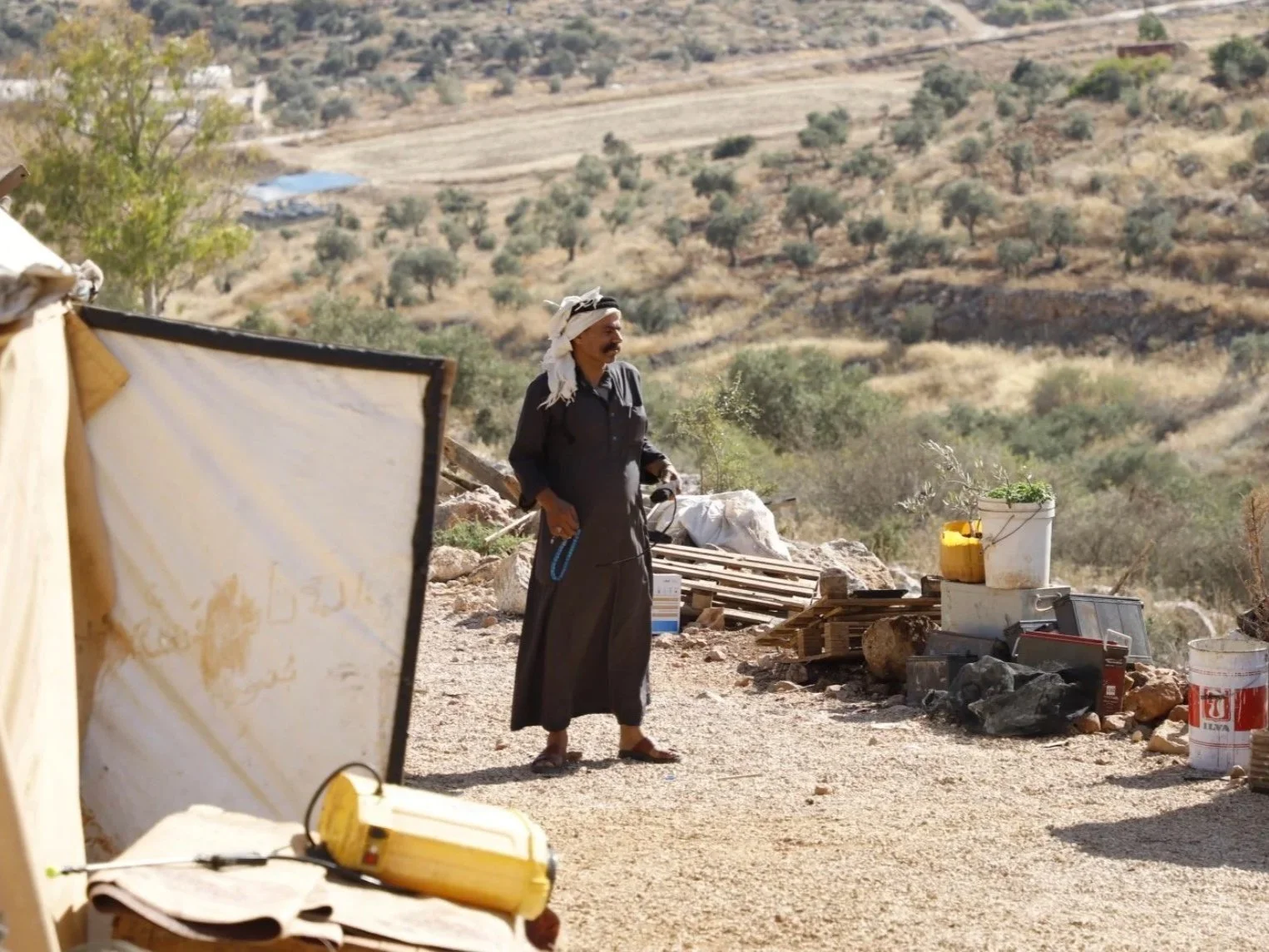
Farmers, herders, and rural families in the Tubas governorate — particularly in the villages of Atouf, Tammun, Tayasir, Far'a, and Aqaba — face loss of their livelihoods, displacement from their homes, and permanent separation from their land.
One farmer in Atouf invested over $48,000 in crops he could not harvest after Israeli forces destroyed his water supply. Approximately 30 families — 180 individuals — in Atouf alone face direct displacement.
Source: Middle East Eye / Al Jazeera, June 2026
The bigger picture
Crimson Thread is not a standalone project. It is part of a larger 500-kilometer wall Israel plans to construct from the occupied Syrian Golan Heights to the Red Sea. According to a leaked Israeli military document, the project fits into a broader strategy consistent with Israel's decades-long Allon Plan — to annex the Jordan Valley through military zones, settlement expansion, and demographic pressure.
International law experts and Palestinian rights organizations have condemned the project as a tool of annexation, not a security measure. Israeli land policy expert Dror Etkes of Kerem Navot has stated the wall's purpose is to allow settlers to seize tens of thousands of dunams that will be trapped on the Israeli-controlled side of the barrier.
What you can do
- →Contact your representatives and urge them to oppose US support for Israeli annexation in the West Bank
- →Share this page with your networks
- →Sign up for DPR-BA action alerts to stay informed as this situation develops